The delimitation of the Armenian-Azerbaijani border should be based on the maps of the last period of the USSR. The Secretary of the Security Council of Armenia, Armen Grigoryan, told this to reporters Wednesday.
He reminded that the leaders of Armenia and Azerbaijan had agreed on October 6, 2022 in Prague to mutually recognize the territorial integrity based on the Almaty declaration of 1991. According to Grigoryan, this declaration states that at the time of the collapse of the USSR, administrative borders (actually, according to the declaration, the “existing borders,” which is not the same thing) are recognized as interstate borders.
“This means that there was a border between Armenia and Azerbaijan, which was recognized as international by the Almaty declaration, and it should be restored based on the latest maps from the time of the USSR. This is a problem, and we want to reach an agreement with Azerbaijan on it.
We are sure that it is a legal approach, it does not violate any international principle and is consistent with the normalization of relations. Discussions are ongoing, and I am confident that we will eventually reach an agreement. Historical maps are not maps from a professional point of view. And in general, the question arises: how far back in history can you go, reach the Roman Empire? Such discussions are unacceptable for us. We insist that the maps of the USSR should be used,” said Grigoryan.
Responding to the question about the regress in the proposals for the peace agreement, Grigoryan said that it is preserved in the latest amendments transferred from Azerbaijan.
“There may be progress and regress in the process, but we are committed to the peace agenda, and in this regard, the peace agreement is a priority for us. Let’s hope that the [next] meeting of foreign ministers and deputy prime ministers [of Armenia and Azerbaijan] will provide an opportunity for progress,” said the secretary of the Security Council of Armenia.
YEREVAN, Sept 20 (Reuters) – Thousands of protesters gathered in the Armenian capital on Wednesday to denounce the Armenian government’s perceived failure to support Armenian separatists in Karabkh, after the breakaway region was forced into a humiliating surrender by Azerbaijan.
The protesters gathered on Republic Square in the heart of Yerevan. Many demanded the resignation of Armenian Prime Minister Nikol Pashinyan, who presided over defeat to Azerbaijan in a 2020 war, and now the final collapse of Karabakh’s Armenian authorities.
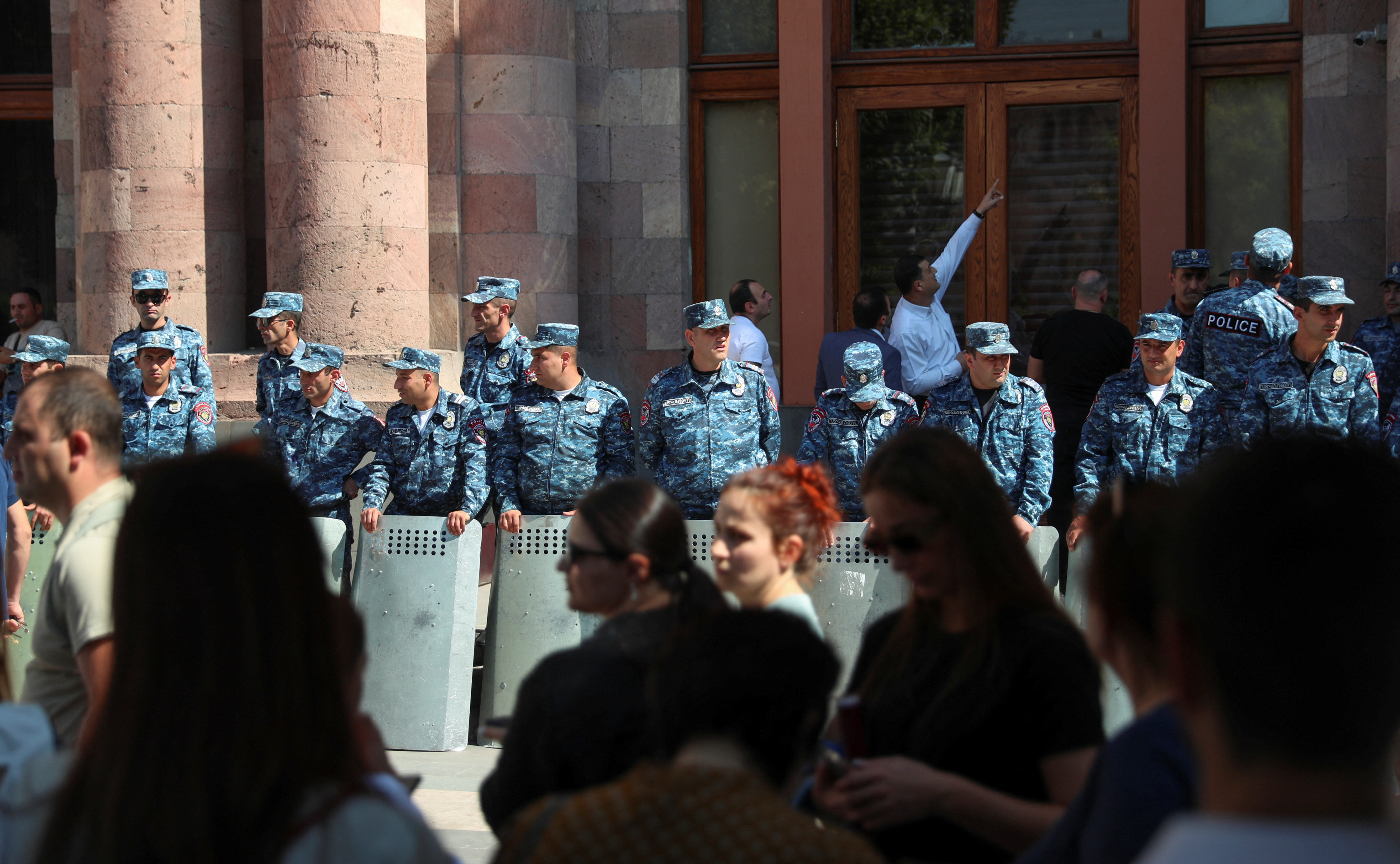
Protesters gather in front of law enforcement officers outside the government building following the launch of a military operation by Azerbaijani forces in the region of Nagorno-Karabakh, in Yerevan, Armenia, September 20, 2023. REUTERS/Irakli Gedenidze
Harut, a 32-year-old solar engineer said: “We hope he leaves. It’s better for a leader who lost the war to leave than to stay and continue.”
He said that the defeat was all the more painful given how long Armenians had fought for Karabakh.
“It’s something that we’ve been fighting for for 30 years, for more than 30 years and now it all went for nothing.”
Protesters gather near the government building following the launch of a military operation by Azerbaijani forces in the region of Nagorno-Karabakh, in Yerevan, Armenia, September 20, 2023. REUTERS/Irakli Gedenidze
Opposition politicians gave speeches from a stage denouncing Pashinyan, who took power in a 2018 revolution during which he addressed rallies on the same square.
Some of those in Republic Square yelled “Artsakh!”, others “Nikol is a traitor!”
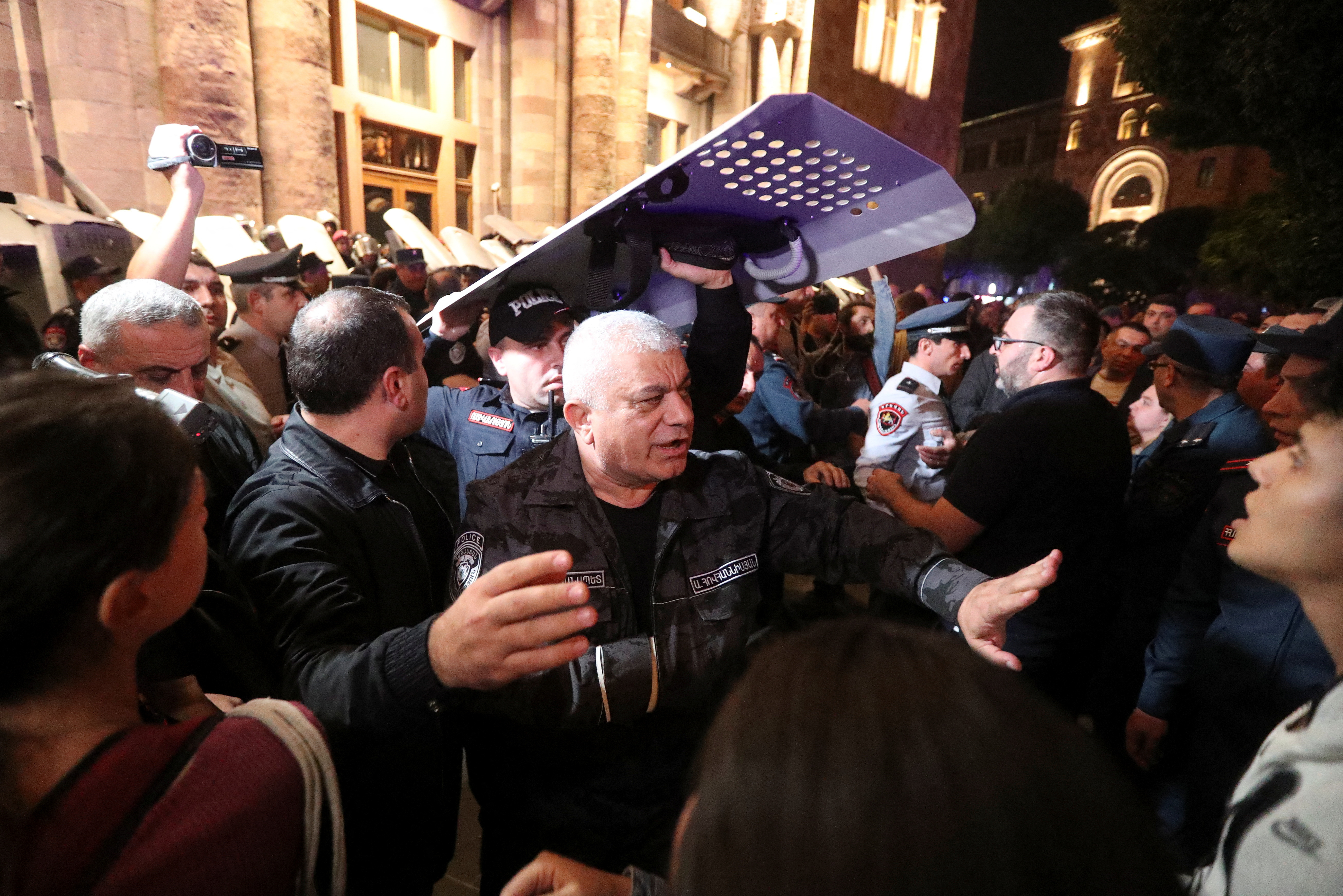
Many of those attending waved Nagorno-Karabakh flags and some scuffled with police. Others threw bottles and stones at the prime minister’s office on Republic Square.
Riot police sealed off the government offices, while military-style trucks were parked near the square amid a heavy security forces presence.
Azerbaijan said on Wednesday that it had halted its offensive after Armenian separatist forces in Nagorno-Karabakh agreed to a ceasefire – whose terms signalled the area would return to Baku’s control.
Protesters sit in front of law enforcement officers near the government building during a rally to support ethnic Armenians in Nagorno-Karabakh following Azerbaijani armed forces’ offensive operation executed in the region, in Yerevan, Armenia, September 20, 2023. REUTERS/Irakli Gedenidze
Armenians, who are Christian, claim a long historical dominance in the area, which they call Artsakh. Azerbaijan, whose inhabitants are mostly Muslim, links its historical identity to the territory too.
Samvel Sargsyan, 21, a student at the Theatre and Cinema University in Yerevan, who was born in Karabakh’s capital, known to Armenians as Stepanakert and to Azeris as Khankendi.
Protesters approach law enforcement officers who stand guard outside the government building during a rally to support ethnic Armenians in Nagorno-Karabakh following Azerbaijani armed forces’ offensive operation executed in the region, in Yerevan, Armenia, September 20, 2023. REUTERS/Irakli Gedenidze
“We need Armenia to join up with Artsakh and fight,” he said.
“Armenians can’t accept another country, another religion. Why should we? Why should Armenia give a part of itself to another nation?”
Sargsyan, who was holding the red, blue and orange flag of Artsakh, added: “If we lose Artsakh, we lose Armenia. Because the next step will be Armenia.”
Another protester, Khachatur Kobelyan, said he was “really shocked with aggression of Azerbaijan on Nagorno-Karabakh”.
A view shows windows of a government building that were broken during a protest following the launch of a military operation by Azerbaijani forces in the region of Nagorno-Karabakh, in Yerevan, Armenia, September 20, 2023. REUTERS/Irakli Gedenidze
“I think that the U.N., USA and Russia, they are the players that could do something, but I’m really very disappointed and I don’t see any hope connected with this solution.”
Pashinyan has publicly accused Russia in recent months of not doing enough to support Armenia. He said on Tuesday that unidentified forces were talking about a coup in Yerevan.
Azerbaijan said that it wanted a “smooth reintegration process” for Karabakh’s Armenians, and rejected Armenian accusations that it wanted to “ethnically cleanse” the region.
Many of those on the square evoked the memory of the Armenian genocide of 1915, referring to the massacres of Armenians under the Ottoman Empire.
Writing by Guy Faulconbridge; Editing by Kevin Liffey and Alex Richardson
Nikol Pashinyan’s tenure as the Prime Minister of Armenia has been marred by allegations of corruption and mismanagement. While it is important to note that Pashinyan came to power in 2018 promising to fight corruption and bring transparency to the government, his actions and decisions have raised concerns about his commitment to these ideals.
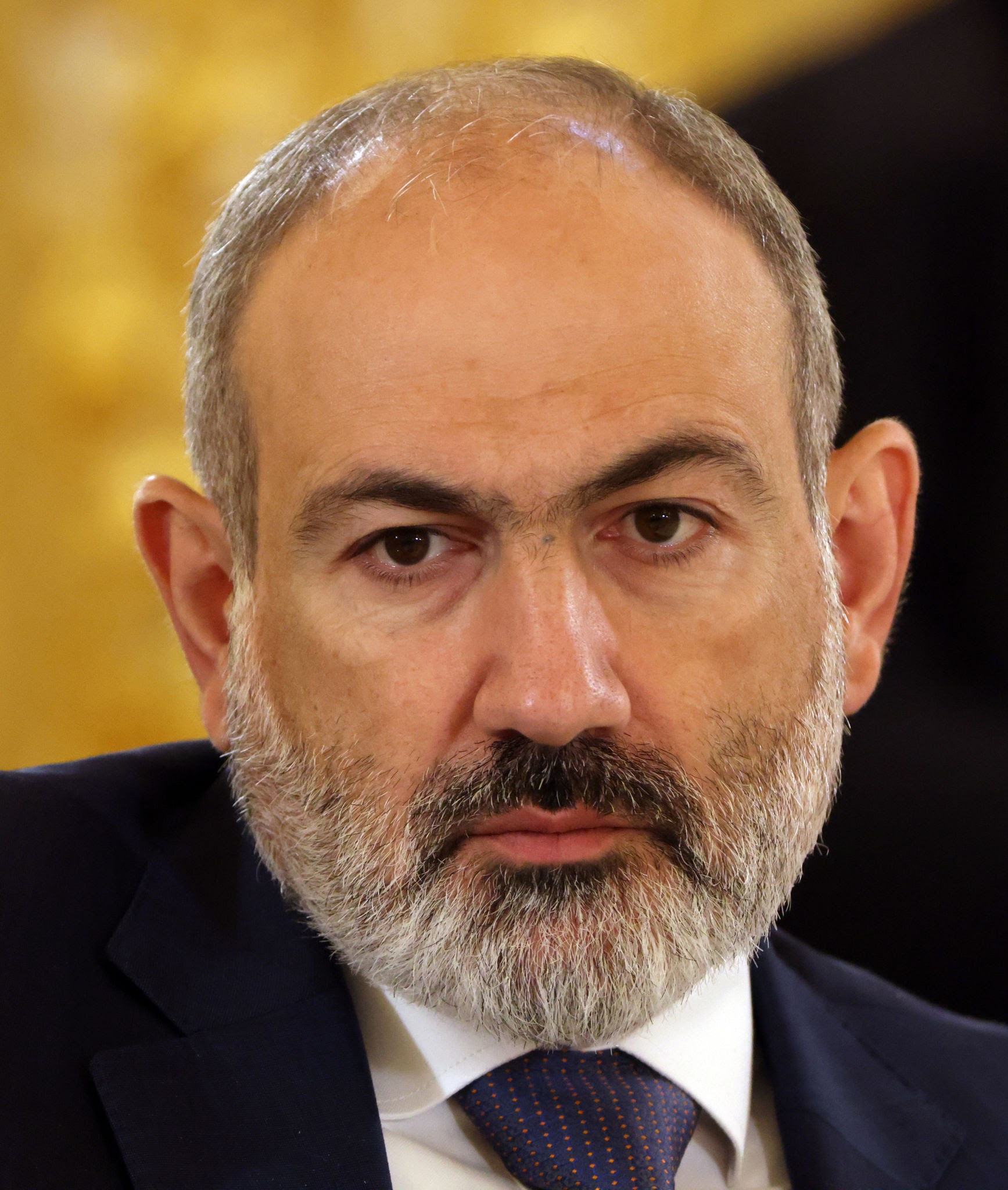
MOSCOW, RUSSIA – MAY 25: (RUSSIA OUT) Armenian President Nikol Pashinyan seen during the Supreme Economic Eurasian Council at the Grand Kremlin Palace on May 25, 2023 in Moscow, Russia. Leaders of Russia, Belarus, Kazakhstan, Kyrgyzstan and Armenia gathered in Moscow for the events, hosted by Eurasian Economic Union (EAEU). (Photo by Contributor/Getty Images)
One of the most significant corruption scandals during Pashinyan’s rule involves the controversial mining project in Amulsar. Despite widespread environmental concerns and protests by activists and local communities, Pashinyan’s government allowed the project to proceed, citing economic benefits. This decision raised suspicions of corruption and favoritism, as there were allegations of close ties between government officials and the mining company involved.
Another instance that raised eyebrows was the appointment of a close associate, Manvel Grigoryan, as the Deputy Chief of the General Staff of the Armenian Armed Forces. Grigoryan had previously faced corruption charges, including embezzlement of military supplies. This appointment demonstrated a lack of commitment to tackling corruption within the armed forces and undermined public trust in the government’s anti-corruption efforts.
Furthermore, Pashinyan’s administration has been criticized for lacking transparency in its decision-making processes. There have been allegations of nepotism and cronyism, with key positions being filled by individuals with personal connections to the ruling party rather than based on merit. This has led to concerns that important decisions are being made for personal or political gain rather than in the best interest of the country.
Additionally, Pashinyan’s handling of the 2020 Nagorno-Karabakh conflict has been subject to criticism. While the conflict itself was not directly related to corruption, there were accusations that Pashinyan’s government mishandled the situation due to internal power struggles and a failure to adequately prepare the military. Such allegations raised concerns about the government’s ability to effectively govern and protect the interests of its citizens.
It is worth noting that these are allegations and criticisms leveled against Pashinyan’s government, and they may vary in terms of credibility and evidence. However, they have undoubtedly contributed to a perception of corruption and a decline in public trust during his time in office.
Minister of Foreign Affairs of Armenia Ararat Mirzoyan went on Twitter and reflected on the death of two children from Artsakh (Nagorno-Karabakh; NK), 3-year-old Leo and 6-year-old Gita, emphasizing that this was a consequence of the Azerbaijani blockade of Artsakh.
Seven-month blockade of the Lachin corridor and total siege of Nagorno-Karabakh people is having irreversible and devastating impact on lives of the people, Mirzoyan stated.
“NK resident children 3 y/o Leo &6 y/o Gita died as consequence of serious humanitarian situation. In 21st century. This should not be tolerated,” the Armenian FM concluded.
“Without accountability, there is no justice,” says Senate Foreign Relations Committee Chair Bob Menendez
December 1, 2022
WASHINGTON, DC – Senate Foreign Relations Committee Chair Robert Menendez (D-NJ) and Maryland Senator Chris Van Hollen (D-MD) stressed the importance of the U.S. holding Azerbaijan accountable for its war crimes and clearly condemning Azerbaijani aggression against Armenians, during the Senate confirmation hearing for Biden Administration nominees for U.S. Ambassador to Armenia and Russia, reported the Armenian National Committee of America (ANCA).
In questions to U.S. Ambassador to Armenia Lynne Tracy, who has been nominated for the U.S. ambassadorial post in Russia, Chairman Menendez expressed dismay that State Department officials recently evaded inquiries about videos depicting Azerbaijan’s murder and mutilation of Armenian captives, during what the Chairman described as “one of the most disappointing hearings I have ever conducted.” In response to Amb. Tracy’s reference to outreach to the Armenia Human Rights Ombudsperson regarding the investigation of the videos, Chairman Menendez demanded more. “We need our ambassadors, particularly in places of conflict, to be able to pursue what the truth is, so that we, as policymakers, can decide what to do about that truth,” stated Sen. Menendez.
Video of Chairman Menendez’s exchange with Ambassador Tracy is available here:
Later, when U.S. Ambassador to Armenia-designate Kristina Kvien pledged to do her “best to help the Armenians with any requests they have to document” atrocities depicted in these videos, Chairman Menendez was adamant. “I don’t want requests from Armenians, I want us to be proactive so that we can make a determination,” stated Chairman Menendez, explaining that Senators need the facts about the Azerbaijani war crimes and aggression when deciding the enforcement of Section 907 restrictions on U.S. aid to Azerbaijan. “I want an ambassador who is going to pro-actively help us determine whether executions, whether these mutilations, whether these other activities are true or not […] so that we as policymakers can make a decision. Can I depend upon you to do that,” asked Chairman Menendez.
“Yes, Senator, and I will go further to say that accountability for crimes of this nature are very important to me, and I will work to make sure there is accountability as well,” stated, Ambassador-designate Kvien. Offering the last word, Chairman Menendez remarked, “Without accountability, there is no justice.”
Video of Chairman Menendez’s exchange with Ambassador-designate Kvien is available here:
Building on Chairman Menendez’ exchange, Senator Van Hollen stressed the importance of accountability, sharing his dismay at Assistant Secretary of State for European and Eurasian Affairs Karen Donfried and State Department Senior Advisor for Caucasus Negotiations Philip Reeker’s refusal to clearly identify Azerbaijan as the aggressor during the recent attacks, when the testified at the November 16th hearing. “It was very well documented in September by independent press sources that Azerbaijan launched attacks and engaged in different types of atrocities,” stated Sen. Van Hollen. “I understand the importance of being a mediator, but in order to be a credible mediator, in my view, you have to at least begin with the facts – and be willing to publicly state them.”
Video of Sen. Van Hollen’s remarks is available here:
On U.S. aid to Artsakh, Chairman Menendez noted that he is “deeply concerned that neither the State Department nor USAID have provided the humanitarian assistance necessary to assist the 100,000 displaced by the Nagorno Karabakh war of 2020 or the current needs of those who still reside in the region.” The Chairman went on to secure a public commitment from US Ambassador-designate to Armenia Kvien to support a U.S. humanitarian needs assessment for the victims of Azerbaijan’s aggression in Artsakh and Armenia.
Regarding the proper acknowledgment of the Armenian Genocide, Chairman Menendez stated “I am glad to see a nominee who actually calls the Armenian Genocide a ‘genocide,’ noting that he had, in the past, stopped nominees who denied the Armenian Genocide in their responses to Senate inquiries.
Video of the exchange with U.S. Ambassador-designate Kvien is available here:
Senators have a week to submit additional questions to the Ambassador-designates, after which time the Senate Foreign Relations Committee, and later the full Senate, will have the opportunity to confirm the nominees.
Earlier this week, the ANCA shared a number of suggested policy priorities to be addressed during the Senate confirmation process for the next U.S. ambassador to Armenia. Topics included strengthening bilateral U.S.-Armenia relations, checking Azerbaijani aggression, securing the release of Armenian POWs, facilitating U.S. assistance to Artsakh, and putting into real-world practice the Administration’s policy recognizing the Armenian Genocide. Suggested questions can be reviewed at: anca.org/ArmeniaAmbassador.
“It seems to me, the U.S. is in bed with Azerbaijan,” stated Chairman Menendez
November 16, 2022
WASHINGTON, DC – Senate Foreign Relations Committee Chairman Bob Menendez (D-NJ) led a stinging indictment of the U.S. policy on Azerbaijan, charging that the State Department witnesses testifying at the November 16th hearing were “wholly unresponsive” to concerns about the ongoing waiver of Section 907 restrictions on U.S. aid to Azerbaijan and the lack of meaningful U.S. assistance to Artsakh (Nagorno Karabakh) and Armenia following Azerbaijani attacks, reported the Armenian National Committee of America (ANCA).
“We want to thank Chairman Menendez for holding this hearing and shining a much-needed spotlight on our State Department’s deeply flawed policies in the Caucasus region,” said Aram Hamparian, Executive Director of the ANCA. “The inability of either witness to answer straightforward questions speaks to the incoherence of our present State Department policy – how very far the Administration’s reckless and irresponsible approach toward the region has drifted from actual U.S. interests and core American values.”
Assistant Secretary of State for European and Eurasian Affairs Karen Donfried and State Department Senior Advisor for Caucasus Negotiations Philip Reeker were witnesses at the November 16th Senate Foreign Relations Committee hearing titled “Assessing U.S. Policy in the Caucasus.”
Chairman Menendez summed up their responses this way: “This has been one of the most disappointing hearings I’ve ever held, but it has crystalized some things for me. One is, it seems to me the United States is in bed with Azerbaijan.”
Citing Assistant Secretary Donfried’s testimony that the U.S. urges Azerbaijan to respect human rights, Chairman Menendez pushed back, “yet we give it money, and they continue to do what they want. Money is fungible, and so whether it is direct assistance that can hurt Armenia or not, money is fungible.” Calling the Administration’s annual waiver of Section 907 restrictions on U.S. aid to Azerbaijan “automatic,” Chairman Menendez asked, “how on Earth can the United State justify sending any kind of support, security or otherwise, to a regime in Baku. It’s inexcusable. I personally think it’s morally repugnant, and it makes a mockery of the FREEDOM Support Act.” Chairman Menendez called out the false parity in U.S. statements, citing US apparent refusal to clearly and unequivocally condemn Azerbaijani aggression against Armenia and Artsakh. “You have to recognize when there is an aggressor. If I am the recipient of the violence, and you are urging both sides to stop the violence, if there is one side that is the aggressor, you should direct your comments to the aggressor. We seem incapable of doing that.” Chairman Menendez was visibly angered by the lack of State Department investigation into Azerbaijan’s use of illegal munitions against Artsakh during the 2020 war. “We have done NOTHING to verify the videos and evidence of cluster munition, of white phosphorus – which are illegal,” stated Chairman Menendez. He also called attention State Department’s inaction in the face of Azerbaijani torture, and murder of Armenian POWs, including the mutilation of a female Armenian soldier in September. “We have done NOTHING to verify the videos of the execution of Armenian soldiers, the abuse of female Armenian soldiers – we have done nothing. I ask you, are you aware of the videos, [you respond] ‘yes’, but did we do anything to verify them, ‘no’,” stated Menendez. Both Assistant Secretary Donfried and Senior Advisor Reeker evaded the Chairman’s questions on U.S. assistance to help the people of Artsakh and Armenia following the 2020 war and Azerbaijan’s ongoing attacks, with Reeker citing a paltry $2 million in U.S. demining assistance. “You come to a hearing in which you can’t even tell me, with any degree of specificity, what humanitarian assistance we are providing. So, it’s totally, totally unacceptable, and you can tell the Secretary I will be looking for ways to express my dissatisfaction,” stated Chairman Menendez.
Senior Foreign Relations Committee member Ed Markey (D-MA) noted that this September, he and several colleagues had sent a letter to Secretary of State Antony Blinken and Secretary of Defense Lloyd Austen asking them to prevent any security assistance from going to Azerbaijan until Armenia and Azerbaijan reach a permanent lasting resolution to ensure peace and stability in Nagorno Karabakh. He noted that they had not yet received any answers to several questions they had posed in the letter and proceeded to ask them the witnesses directly about US aid to Azerbaijan and the lack of U.S. assistance to Artsakh. Senator Chris Van Hollen (D-MD) asked if the State Department had issued an assessment on Azerbaijan’s unilateral attack on Armenia in September. Assistant Secretary Donfried replied that, “all of these things are complicated, and our focus has been, how do we move these two countries to a peace agreement after thirty years of conflict.” Sen. Van Hollen pressed again, asking whether the State Department felt that Azerbaijan’s attack was in response to Armenian aggression. Assistant Secretary Donfried, again evading the question regarding Azerbaijan’s unilateral attack, stated, “at that time, when we spoke to both parties [Armenia and Azerbaijan] our focus was on stopping the violence. I do think we played an important role in that violence being stopped.” Sen. Van Hollen responded, “with all due respect, that did not answer my question” and stated he would follow up later. Senator Cory Booker (D-NJ) focused on the impact of the Ukraine conflict and on Russia’s role as peacekeepers in Nagorno Karabakh and, politically more broadly in the region. Sen. Ben Cardin (D-MD) asked whether the Organization for Security and Cooperation in Europe (OSCE) Minsk group mediation efforts on Nagorno Karabakh still had relevance. Others asking broader questions regarding Ukraine, Georgia, and the situation in the Caucasus region included Senators Jeanne Shaheen (D-NH), Tim Kaine (D-VA), and Chris Murphy (D-CT). The ANCA live-streamed the hearing in full, video of which is available here:
Earlier this week, the ANCA submitted testimony to the Senate Foreign Relations Committee, which Senator Menendez announced would be included as part of the record of the hearing. ANCA Government Affairs Director Tereza Yerimyan stated that “the oil-rich Aliyev regime must be held accountable, through the immediate cessation of U.S. military aid and the investigation of its invasions, atrocities, and war crimes. These actions must be matched with a robust aid package to meet pressing humanitarian and developmental needs in Artsakh. In terms of U.S.-Armenia bilateral ties, we seek a paradigm shift in relations that prioritizes the security and viability of Armenia and Artsakh in the face of existential regional threats.”
Yerimyan’s testimony addressed a range of ANCA policy priorities including:
— Full enforcement of Section 907 restrictions on U.S. aid to Azerbaijan. — No less than $50 million in direct U.S. humanitarian aid to Artsakh. — Official inquiries into arms export violations related to Turkish drones. — Strict scrutiny of ambassadorial nominations to Armenia and Azerbaijan. — U.S. pressure on Turkey to stop obstructing justice for the Armenian Genocide. — Investigation into Azerbaijani war crimes, including its use of prohibited munitions, recruitment of foreign mercenaries, cultural and religious desecration, and the illegal detention, abuse, and murder of Armenian prisoners of war.
A publication close to the administration of the Azerbaijani President hints at a “special operation” in Artsakh.
In an article with an unambiguous title “How can Azerbaijan get rid of Armenian armed formations in Karabakh?” after a long list of what Armenia supposedly has to do, the authors pose the following question: “As a result, the question becomes more and more topical: what should Azerbaijan do in the current situation? And, most importantly, how long must Baku tolerate the presence of illegal armed formations and Armenian servicemen on its territory?” and they give an answer themselves: “Defense Minister Zakir Hasanov ordered during a meeting with the army command to strictly suppress any provocations both on Armenian-Azerbaijani border and in the areas under the control of Russian peacekeeping forces.
It follows that the Azerbaijani army is ready to carry out a special operation to completely neutralize the illegal Armenian formations operating on the sovereign territory of Azerbaijan. If Armenia continues to resort to delaying tactics and not fulfilling its obligations on their disarming and withdrawal from the territories under control of the separatist regime in Khankendi, Azerbaijan has every opportunity and appropriate means to implement a special operation in the shortest possible time”.
Glendale Mayor Ardashess Kassakhian has introduced a resolution in City Council to establish a Sister City relationship with Artsakh’s Martuni.
“As the mayor of Glendale, I decided to establish a symbolic connection between Glendale and the city of Martuni in the Republic of Artsakh. When I assumed the position of mayor in April, I received a letter in which the mayor of Martuni proposed to establish the sister city relation,” Kassakhian told Asbarez’s Nane Avagyan in an exclusive interview. “I presented the proposal at a City Council session, and I hope that it will be approved by October.”
He said that the city of Martuni of the Republic of Artsakh has a special significance, taking into account what the population of Artsakh has gone through and is still going through. “A week doesn’t pass without news that Azerbaijani forces are attacking the peaceful population of Artsakh,” said Kassakhian.
“Just as during the war, when we follow developments from far away, we feel helpless—unable to provide tangible assistance,” said Kassakhian explaining that Glendale Armenians allocated financial assistance during the war and gathered and provided much-needed items. There were also people who traveled to Armenia and Artsakh at the time.
“Several doctors from Glendale were on the frontlines during the war and provided medical assistance to to our soldiers,” Kassakhian said.
He added that, as mayor, he has decided to help Artsakh by establishing a sister city relationship between Glendale and Martuni.
“This effort demonstrates that not only do we have such [sister city] relations with municipalities located with Armenia proper, but also with Artsakh, which I consider to be part of Armenia—our ancestral lands and their heritage,” said Kassakhian.
“The fact that Artsakh is Armenian is beyond doubt. Martuni is an Armenian city that had, has, and should have an Armenian population. By conferring a sister cities status, Glendale, the most Armenian-populated city in America, lights a candle of hope in Artsakh, Glendale, and I also hope in Armenia so that Martuni continues to be an Armenian-populated city,” added Kassakhian.
He assured that after the approval of sister city measure, practical steps will follow, specifically by advancing relations within the education sector by having exchange programs between the two cities.
Avagyan’s exclusive interview with the Glendale Mayor will appear in the Armenian section of Asbarez in the coming days.
Fighting has erupted between Armenia and Azerbaijan around the separatist region of Nagorno-Karabakh. Both sides have blamed each other; Armenia claims the alleged Azerbaijan attack is a declaration of war.
The two sides resumed open conflict again on Monday morning with the use of heavy artillery. Outbreaks of violence had continued through the night, according to the Armenian Defense Ministry spokesperson Shushan Stepanyan.
“During night battles continued with different intensity. Early in morning, Azerbaijan resumed its offensive operations, using artillery, armored vehicles, TOS heavy artillery system,” Stepanyan wrote on Twitter.
Armenian forces reportedly attacked the town of Terter with heavy artillery, according to the Azerbaijani Ministry of Defense.
At least 31 people — both civilians and military — have died in fighting that erupted on Sunday between Azerbaijani forces and Armenian rebels in the breakaway Nagorno-Karabakh region, officials said.
Separatists reported 15 further military casualties on Monday. The Azerbaijani Foreign Ministry, meanwhile, announced the death of six civilians, with at least 19 more injured in the violence.
Fear of new war
The worst violence in the region since 2016 has raised the prospect of a new war in an area that has been simmering for decades.
Armenian Prime Minister Nikol Pashinyan said in a televised address that Azerbaijan’s “authoritarian regime has once again declared war on the Armenian people.”
“We are on the brink of a full-scale war in the South Caucasus, which might have unpredictable consequences,” he added. “We are ready for this war.”
Both countries declared martial law. The president of Azerbaijan declared a partial military mobilization in the country as part of a presidential decree on Monday morning. Armenia began a general mobilization on Sunday.
Pashinyan also spoke to Russian President Vladimir Putin, with Putin expressing “serious concern” over the escalation. Russia maintains a military base in Armenia, and is seen as an ally to Yerevan. Both Armenia and Azerbaijan are former Soviet republics.
Turkey, meanwhile, is considered an ally of Azerbaijan, and has been vociferously criticizing the Armenian government.
In a statement posted on Twitter following a phone call with Azeri President Ilham Aliyev, Turkish President Recep Tayyip Erdogan called on the Armenian people to stand against leaders who he said were “dragging them to catastrophe,” before adding that Ankara’s solidarity with Baku would “increasingly continue.”
Armenia’s Defense Ministry accused Azerbaijan of launching a bombing campaign against civilian targets. Yerevan said the military responded by shooting down four of Azerbaijan’s military helicopters, as well as 15 drones and 10 tanks, a claim Azerbaijan’s Defense Ministry denied.
“The entire responsibility for this lies with the military-political leadership of Azerbaijan,” insisted an Armenian Defense Ministry spokesperson.
Azerbaijan, meanwhile, accused Armenian forces of launching “deliberate and targeted” attacks on Nagorno-Karabakh.
“There are reports of dead and wounded among civilians and military servicemen,” Azerbaijan’s president said.By the afternoon, Azerbaijan claimed to have taken several villages in the region. “We have liberated six villages — five in Fizuli district and one in Jebrail district,” a ministry spokesman told AFP.
Iran has offered to mediate between the two sides. Iranian Foreign Ministry spokesman Saeed Khatibzadeh said Tehran was following the violence in the south Caucasus with great concern, news agency ISNA reported.
“We call on both sides to exercise restraint, end the conflict immediately and resume negotiations,” he said, while offering Tehran’s support in working towards a resolution.
This image, from footage released by the Armenian Defense Ministry, purportedly shows Armenian army tanks destroying vehicles belonging to Azerbaijan
Authorities in Nagorno-Karabakh said the city of Stepanakert has been shelled and urged residents to get to safety. Numerous houses in villages have been destroyed, with injuries reported.
The breakaway region immediately declared “martial law and total military mobilization,” Karabakh’s president Araik Harutyunyan told an emergency parliament session. He said that those liable for military service had been called up for duty.
European Council President Charles Michel said the renewed violence was “of most serious concern” and called for an end to the fighting.
German Foreign Minister Heiko Maas also urged a return to diplomatic channels.
“I call on both parties to the conflict to immediately cease all fighting and especially the shelling of villages and towns,” he said, according to the Foreign Ministry in Berlin.
Months of tension
Silvia Stöber, a journalist and expert on the Caucasus region, told DW that both sides had been preparing for an escalation like this for months.
She blamed the deteriorating economic situation in both countries for the flare-up but said international involvement probably played a role.
“The leadership of Azerbaijan may feel more motivated to escalate the whole situation” due to increased support from its ally Turkey, while the importing of Russian arms into Armenia means that it “looks like a conflict that [will go] further,” Stöber added.
During his noon blessing from St Peter’s Square, Pope Francis asked both sides to make “concrete gestures of goodwill and brotherhood” in order to resolve their differences without the use of force.
Violence first erupted in the region when ethnic Armenians seized Karabakh from Azerbaijan in the 1990s. An estimated 30,000 people were killed during the war.
A ceasefire, which was signed in 1994, largely put an end to the full-scale conflict, but peace talks mediated by France, Russia and the United States collapsed in 2010.
Azerbaijan has made repeated threats to take back the region by force. Although the region declared independence, it is heavily reliant on Armenian support and Armenia has stated that it would defend the territory militarily.
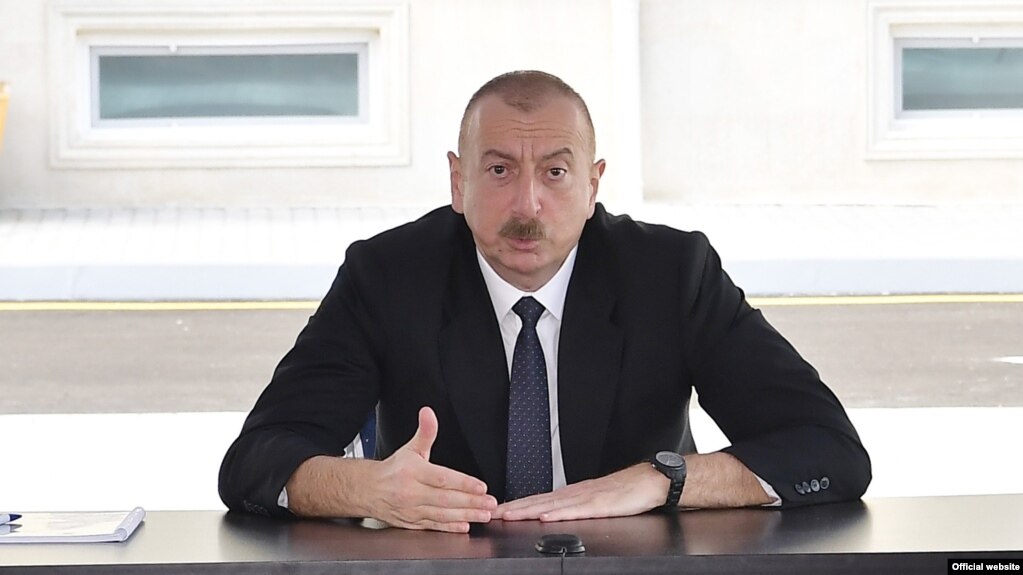
Azerbaijan — President Ilham Aliyev speaks in Ganja, June 25, 2020.
Azerbaijan’s President Ilham Aliyev has lambasted the U.S., Russian and French mediators trying to broker a solution to the Nagorno-Karabakh conflict and said the most recent Armenian-Azerbaijani talks were fruitless.
In an interview with Azerbaijani television aired on Tuesday, Aliyev denounced the mediators co-chairing the OSCE Minsk Group for reiterating last week that “there is no military solution to the conflict.”
“Their main point is that the problem cannot be solved militarily,” he said. “Who said that? We expect more serious, clear and targeted statements from the mediators.”
“In essence, no negotiations are held right now,” claimed Aliyev. “The video conferences of the [Armenian and Azerbaijani] foreign ministers are meaningless and are only leaving the impression that the Minsk Group exists.”
“As I have said before, we will not negotiate for the sake of negotiating and we want substantive negotiations without any change in their format. In that case, we will participate in them. Otherwise, I see no need for pointless negotiations.”
Foreign Ministers Zohrab Mnatsakanian and Elmar Mammadyarov as well as the three mediators most recently talked via video link on June 30. They reported no progress towards a Karabakh settlement.
In a joint statement issued right after the talks, the Minsk Group co-chairs said they urged the conflicting parties to “take additional steps to strengthen the ceasefire and to prepare the populations for peace.” They also said the two ministers agreed to hold another video conference in July and to meet in person “as soon as possible.”
Yerevan and Baku traded bitter recriminations both before and during the latest round of peace talks. Speaking at a June 25 meeting with Azerbaijani army officers, Aliyev described Armenia’s post-Soviet history as “shameful,” saying that his country’s arch-foe was for decades ruled by “criminals and thieves.” He also said that the 2018 popular protests that brought Nikol Pashinian to power were not a democratic revolution.
The Armenian Foreign Ministry hit back at Aliyev, saying that he leads one of the world’s most corrupt and repressive regimes which feels threatened by “democratic changes taking place in Armenia.”








 FromTheUssr